
Taking an IELTS speaking practice test is one of the best ways to make you more confident, more conversational and familiarise you with the strict format of the exam. Whether you are trying to achieve a Band 7, 8 or 9, by using an IELTS speaking practice test 2026, you can make sure that you are studying the latest topics and are aware of the expectations of examiners. Get going right now with an IELTS speaking practice test free of cost, and find excellent tips to ace your exam!
What Is the IELTS Speaking Practice Test and Why Does It Matter in 2026?
The IELTS speaking practice test is a fully simulated exercise that mimics the official 11-14-minute speaking exam in three structured parts, intended to build confidence, improve fluency, and reveal scoring gaps in advance of the actual test.
- For example, an IELTS speaking practice test replicates the official exam format with timed parts and scoring criteria, whereas general English conversation practice focuses on fluency without structured timing or band assessment.
- It is especially important for IELTS because it builds familiarity with question types, timed structure, and examiner style, not just general speaking ability.
- Accent interference and the lack of spontaneous conversation in English outside of classrooms are some of the reasons that many Indian test-takers underperform in Speaking.
- Both Academic and General Training candidates take the same Speaking test format; only Listening, Reading, and Writing differ between the two modules.
| Aspect | Official Test | Practice Test |
|---|---|---|
| Duration | 11–14 minutes | 11–14 minutes (simulated) |
| Format | Parts 1, 2, 3 with live examiner | Same parts, often with a simulated examiner |
| Scoring | Band 0–9 by certified examiner | No official band; diagnostic feedback |
| Feedback type | None during test (results later) | Immediate or recorded review feedback |
“Indian test-takers who take at least 5 full speaking practice tests before their exam date consistently report higher band scores. The practice test simulates exam pressure that no vocabulary list can replicate.”— Shreya, WorkAbroad Expert
Available Speaking Practice Tests
How Is the IELTS Speaking Practice Test 2026 Structured? (Parts 1, 2, and 3 Explained)
The IELTS speaking practice test 2026 has a set three-part structure and takes 11-14 minutes, testing fluency, vocabulary, pronunciation, and coherence.
| Part | Duration | Format | What Examiner Assesses | Example Question |
|---|---|---|---|---|
| Part 1 | 4–5 mins | Personal introduction & short Q&A | Fluency, grammar range, basic vocabulary | “Do you like using technology?” |
| Part 2 | 3–4 mins | 1-min prep + 1–2-min monologue from cue card | Coherence, topic development, detail | “Describe a meal you enjoyed.” |
| Part 3 | 4–5 mins | Follow-up discussion linked to Part 2 | Analysis, opinions, abstract expression | “How has technology changed communication?” |
What Happens in IELTS Speaking Part 1? (Introduction and Personal Questions)
- Examiner checks ID, then asks about 3 familiar topic areas with approximately 3–4 questions per topic (hometown, work/study, hobbies).
- Popular 2026 topics: Food, Travel, Use of Technology, Weather, Friends, Childhood.
- Aim to give 2–3 sentence answers, using past simple for past experiences and present simple for current habits.
What Is the IELTS Speaking Part 2 Cue Card and How Should You Practice It?
- Part 2 provides a cue card with 3-4 points to cover. You have 1 minute to prepare and then speak for 2 minutes.
- 2026 Themes: Daily technology use, social meals, family members admired, memorable trips.
- Use the simpler WHAT–WHEN–WHERE–WHY–HOW approach, and record your speech for about 2 minutes to evaluate.
“Candidates who practise the cue card format with a timer are statistically less likely to run out of ideas mid-speech; structure matters more than vocabulary in Part 2.”— WorkAbroad Expert
How Do IELTS Speaking Part 3 Discussion Questions Differ from Part 1?
- Part 3 lasts 4-5 minutes and focuses on abstract expansion of the Part 2 topic.
- Opinions, comparisons, and hypotheticals (e.g. social media, environment, education) are discussed.
- Use discourse markers like "Furthermore," "On the other hand," and "That said" to demonstrate coherence.
- Avoid short and personal responses; develop 2-3 sentence analytical responses instead.
How Are You Scored? What Are the IELTS Speaking Band Descriptors in 2026?
IELTS Speaking is scored on four equally weighted criteria (25% each): Fluency and Coherence, Lexical Resource, Grammatical Range and Accuracy, and Pronunciation. Accent does not reduce your band—only clarity and intelligibility matter.
| Criterion | Band 6 Indicator | Band 7 Indicator | Band 8 Indicator |
|---|---|---|---|
| Fluency & Coherence | Can speak at length but with noticeable hesitation and some loss of coherence | Speaks at length with only occasional hesitation; generally clear flow | Speaks fluently with minimal effort; ideas flow smoothly and are well linked |
| Lexical Resource | Enough vocabulary for familiar topics, but some repetition | Good range of vocabulary used naturally; a few awkward choices | Wide, precise vocabulary; idiomatic expressions used comfortably |
| Grammar Range & Accuracy | A mix of simple and complex structures, but with frequent noticeable errors | Mostly accurate; some complex structures with occasional slips | Extensive structures with very few errors; good control of tense |
| Pronunciation | Mostly clear, but some sounds hard to follow; rhythm may be uneven | Clear with only minor mispronunciations; generally easy to understand | Clear, natural rhythm and intonation; usually effortless to follow |
Where Can You Take a Free IELTS Speaking Practice Test in 2026?
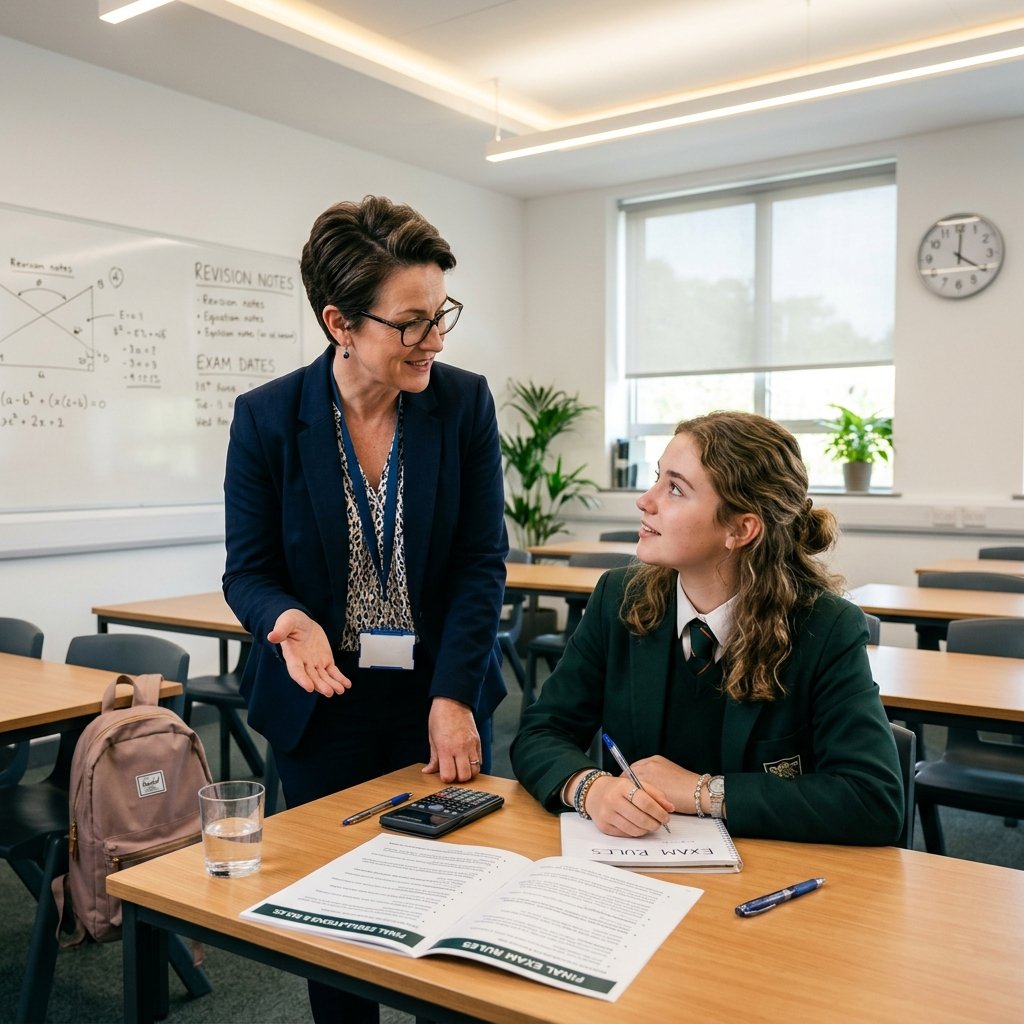
Several reliable platforms let Indian test-takers practice at zero cost. Official British Council and IDP resources offer free exercises and video mock trials, while interactive simulators provide instant feedback on self-recordings.
“The British Council's official free practice test is the gold standard for format familiarity, but AI-powered simulators fill the critical gap of instant, scalable feedback; use both strategically.” — WorkAbroad Expert
What Are the Most Common IELTS Speaking Practice Test 2026 Topics for Indian Candidates?
The most common IELTS speaking practice test topics include technology, environment, food, travel, and social relationships.
What Are the Top Part 1 IELTS Speaking Practice Topics in 2026?
- Cooking: Do you enjoy cooking? “Yes, I enjoy cooking sometimes, especially Indian dishes, because it helps me relax.”
- Weather: What was the weather like when you were a child? “It was usually hot in summer and cool in winter, and I remember playing outside more.”
- Other common topics: Sports, reading habits, friends, and social life.
How Do You Prepare for the IELTS Speaking Part 2 Cue Card Practice Test?
- Read the card carefully, underline keywords, and spend 60 seconds jotting down notes before speaking for 2 minutes.
- Sample cue cards: “Describe a traditional festival in your country,” “Describe a place you want to visit again.”
What Kind of Discussion Questions Appear in IELTS Speaking Part 3 Practice?
- Requires evaluative, comparative, and hypothetical answers linked to the Part 2 theme.
- Practice structure: Position → Reason → Example → Concession to build mature, Band 7+ responses.
How Can You Improve Your Score With an IELTS Speaking Practice Test at Home?
- Record your answers: Record yourself speaking, self-assess against the four band descriptors, and find your weakest area.
- Create a daily routine: Practice shadowing fluent speakers, run timed 2-minute cue card runs, and list topic vocabulary.
- Target each skill: Focus on eliminating fillers for fluency, using collocations for lexical resource, tenses for grammar, and clarity for pronunciation.
What Are the Most Effective Tips for Scoring Band 7+ in the IELTS Speaking Practice Test?
Speak naturally, avoid memorised scripts because examiners detect and penalise them in an IELTS speaking practice test free session.
- Extend answers using connectors like "because," "which means that," and "for example."
- Use natural collocations instead of direct literal translations (e.g. "make a decision").
- Mix simple and complex sentence structures to display range.
- Replace fillers like "um" and "like" with short, silent pauses or natural transition phrases.
“Band 7 is not about perfection; it is about controlled fluency and relevant vocabulary. A candidate who speaks naturally with minor errors consistently beats a memorised-script speaker who sounds robotic.”— Divyansh, WorkAbroad Expert
How Does the IELTS Speaking Practice Test Connect to Your Immigration Goals?
For Indian candidates, the IELTS speaking practice test is directly linked to visa success, since many skilled-migration routes require a minimum Speaking band of 6.0–7.0.
| Country | Visa Type | Typical Speaking Requirement |
|---|---|---|
| Canada – Express Entry | Federal Skilled Worker | CLB 7 (IELTS 6.0) / CLB 9 (IELTS 7.0) for points |
| Australia | Skilled Migration (189/190) | IELTS 6.0 minimum; 7.0 for extra points |
| UK | Skilled Worker Visa | B1 level (4.0 overall); higher for NHS/medical roles |
| New Zealand | Skilled Migrant Residence | Band 6.5 overall usually required |
“IELTS Speaking is not just a language test for immigration applicants; it is a CRS points multiplier. At WorkAbroad, we have seen candidates improve their Express Entry score by 20+ points simply by retaking IELTS and raising their Speaking band from 6.5 to 7.5.”— WorkAbroad Expert
Conclusion
The IELTS speaking practice test is the most direct way to turn your current level into the band score your immigration or academic goals demand. Understanding the 11–14-minute, 3-part format, practising against the four band descriptors, and using IELTS speaking practice test free resources with a 30-day plan can push you from 6.0 to 7.0 or higher.
Contact WorkAbroad for more information on IELTS Speaking Practice Test: Free Guide & Tips 2026.
