
The Listening, Reading, Writing, and Speaking skills are evaluated in the IELTS Academic band score, which is 0 to 9, and most universities mandate a score of 6.5 - 7.5 altogether. Scores are good for two years, so the time to prepare is coming up soon for the 2026 applications.
What Exactly is the IELTS Academic Test and Who Should Take It?
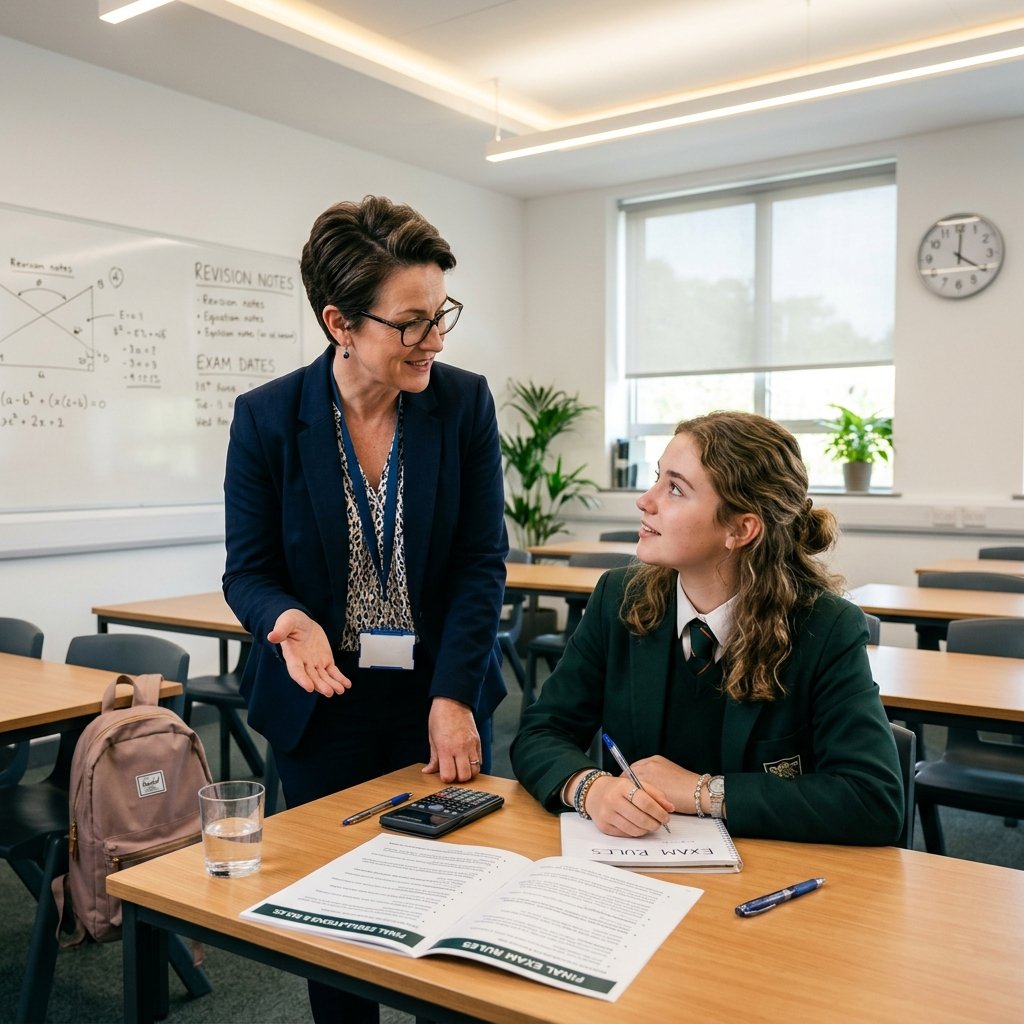
IELTS Academic is the standardised English proficiency test for entry to higher education and for professional registration in English-speaking trades. It tests academic language skills that are required to be successful in university.
- Full Form and Definition: IELTS is the International English Language Testing System. IELTS Academic is specifically designed to evaluate reading, writing, listening, and speaking in academic contexts.
- Conducting Bodies: Conductors are solely the Purveyors of the British Council, IDP: IELTS Australia, Cambridge Assessment English.
- Purpose: University Admissions (from undergraduate, postgraduate and PhD to MBA) and Professional Bodies such as Medicine, Nursing, Engineering, etc.
- Who takes IELTS Academic: Higher education seekers and professionals who need the academic English proof, and not General Training users.
- Key Professions: Preference of NMC UK for nurses, medical and nursing registration boards (General) and engineering registration boards.
- IELTS Academic vs UKVI: The UKVI version has stricter security for UK visa/immigration content; the Academic version is for study/registration.
“If you are applying to a university abroad, even for a work-integrated programme or a diploma, always choose IELTS Academic, not General Training. Universities almost universally require the Academic module for degree-level admissions.”— Shreya, WorkAbroad Expert
What is the Difference Between IELTS Academic and IELTS General Training?
IELTS Academic is designed for university admissions, and IELTS General Training is for immigration or work. Academic work includes more difficult reading of journal articles and data-based writing.
| Section | IELTS Academic | IELTS General Training |
|---|---|---|
| Listening | Same: 40 questions, 30 mins (4 recordings) | Same |
| Reading | Academic texts (journals); Band 7 needs ~30/40 correct. The IELTS Academic band score is tougher due to the complexity of the academic source texts. | Everyday/work texts; Band 7 needs ~34/40 |
| Writing | Task 1: Describe graph/chart (150 words); Task 2 essay (250 words) | Task 1: Letter (formal/informal); Task 2 essay |
| Speaking | Same: 11–14 min interview | Same |
| Purpose | University admissions, professional registration (e.g., USA universities, UK NMC) | Work, immigration |
What is the IELTS Academic Exam Pattern and Format in 2026?
The IELTS Academic exam has four sections: Listening (30 minutes), Reading (60 minutes), Writing (60 minutes), and Speaking (11-14 minutes) in a single sitting, except Speaking, which can be scheduled separately. The total time for the main test is approximately 2 hours and 45 minutes.
| Section | Duration | Questions | Format |
|---|---|---|---|
| Listening | 30 min + 10 min transfer (paper) | 40 | 4 audio recordings, various question types |
| Reading | 60 min | 40 | 3 passages, academic texts |
| Writing | 60 min | 2 tasks | Task 1 data description; Task 2 essay |
| Speaking | 11–14 min | N/A | Face-to-face interview, 3 parts |
What Does the IELTS Academic Listening Section Look Like?
- Duration: 30 minutes Audio + 10 minutes to transfer answers (paper-based only).
- Structure: 4 recordings (2 monologues, 2 conversations); 40 questions in total in all parts.
- Accents: British, Australian, New Zealand, and North American for real exposure.
- Part 1: completely general social conversation (10 questions).
- Part 2: Monologue in a social context (10 Questions).
- Part 3: Academic conversation (up to 4 speakers - 10 questions).
- Part 4: Academic monologue (10 questions-lecture type).
“Part 4 (academic monologue) is consistently rated the hardest by Indian test-takers due to the density of academic vocabulary; prioritise it in your practice sessions.“— WorkAbroad Expert
What Does the IELTS Academic Reading Section Test?
- Duration: 60 minutes for 40 questions (3 passages, 2,150-2,750 words total).
- Texts: Sourced from academic journals, newspapers, textbooks, magazines--no knowledge of the specialist fields required.
- Topics: Science, humanities, social sciences IELTS: Academic.
- Question Types: True/False/Not Given, Headings to Draw, Sentence Completion, Short Answer, Multiple Choice Questions, Summary Completion, Diagram Labelling.
- Key Difference: IELTS Academic materials/texts are more complex/formal than those in the General Training module for everyday use.
- Timing: No additional transfer time; approximately 30/40 correct answers = Band 7.0 in Academic Reading.
“Skimming and scanning are your most important Reading tools; never read every word of a passage. Practice identifying topic sentences and paragraph structure to quickly locate answers.“— WorkAbroad Expert
What Does the IELTS Academic Writing Section Require?
- Duration: 60 min in 2 tasks for General Training or Academic.
- Task 1: 150+ words Minimum (20 min) - describe/interpret graph, chart, table, map or diagram.
- Task 2: 250+ words (40min) - argumentative/ opinion essay; is double weighted in scoring.
- Scoring criteria: Task achievement, Coherence/Cohesion, Lexical Resource, Grammatical Range/Accuracy.
- Challenges: Writing is considered the most challenging section, with a global average Academic Writing band score of approximately 5.5.
- Common Topics: Task 1- Bar/Pie charts, Line Graphs, Processes, Maps. Task 2- Education, Environment, Technology, Society, Health.
“Most Indian test-takers lose marks in Coherence and Cohesion, invest specifically in practising discourse markers (however, therefore, furthermore, on the other hand) and paragraph structure before exam day.“— WorkAbroad Expert
What Happens in the IELTS Academic Speaking Test?
- Duration: 11 to 14 minutes, face-to-face with a certified examiner (video-recorded in online IELTS Academic).
- Format: The same for Academic and General Training.
- Part 1: 4-5 min--Introduction questions (known to learner) (work/studies, hometown, hobbies).
- Part 2: 3-4 min- Cue card topic; 1 min- preparation; 2 min- talk + follow-ups.
- Part 3: 4-5 min- abstract discussion of the theme from Part 2, extend.
- Scoring: Fluency/ Coherence; Lexical Resource; Grammatical Range/ Accuracy; Pronunciation.
- Scheduling: Can either be the same day or within 7 days of the written test.
“The Speaking test is recorded and may be re-evaluated on request — examiners assess your natural ability to communicate, not a memorised script. Practise speaking on unfamiliar topics to build genuine fluency.“— WorkAbroad Expert
What is the IELTS Academic Syllabus for 2026?
The IELTS Academic syllabus covers four skills: listening, reading, writing, and speaking, with no fixed topic list and a focus on language proficiency rather than subject knowledge. It tests academic English readiness for higher education.
| Section | Key Themes/Formats | Skills Tested |
|---|---|---|
| Listening | Social settings, academic lectures, workplace scenarios | Main ideas, details, opinions |
| Reading | Science, arts, social sciences from journals/textbooks; 2026 includes emails/reports | Skimming, scanning, inference |
| Writing Task 1 | Bar/line/pie charts, tables, processes, maps | Data description |
| Writing Task 2 | Opinion, discussion, problem-solution, advantage-disadvantage essays | Argumentation |
| Speaking | Personal life, hobbies, education, environment, technology, social issues | Fluency, vocabulary |
How is the IELTS Academic Band Score Calculated?
IELTS Academic is scored on a 0–9 band scale, with each section receiving an individual band score. The total score is rounded to the nearest 0.5 or to the nearest whole band. The averages ending in .25 round up to the next half band; those ending in .75 round up to the next whole band; all others round down to the nearest half or whole band. Listening/Reading convert raw correct answers to bands; Writing/Speaking use examiner assessment.
- Scale: 0 (Did Not Attempt) to 9 (Expert User); average of four sections, e.g., 6.25 rounds to 6.5.
- Conversion: Listening/Reading raw → band (e.g., 30/40 Reading ≈ 7.0); Writing/Speaking holistic.
- Requirements: Top unis (Oxford/Harvard) 7.0–7.5; most unis 6.0–6.5; UK nursing 7.0+ per section; Australia unis 6.5+; USA 6.5+; Germany 6.0–7.0. Canada/Australia PR needs General.
- CEFR: Band 7.0–8.0 = C1; Band 5.5–6.5 = B2.
- Global Average: ≈ 5.9 for Academic.
| Band | Descriptor | Approx. % Test-Takers |
|---|---|---|
| 9.0 | Expert User | <1% |
| 8.0 | Very Good User | 5–10% |
| 7.0 | Good User | 15–20% |
| 6.0 | Competent User | 25% |
| 5.0 | Modest User | 20% |
“A Band 7.0 is the "golden standard" for most Indian study-abroad destinations and professional licensing boards; aim for 7.0+ even if your target institution lists 6.5 as the minimum, to give yourself a buffer and strengthen your application.”— Divyansh, WorkAbroad Expert
What Band Score Do You Need for IELTS Academic for Top Universities?
IELTS Academic requirements vary by country and institution, typically 6.5+ overall for admissions.
| Country/Region | Requirement |
|---|---|
| UK (Russell Group) | 7.0+ overall |
| USA (MIT/Stanford) | 7.0–7.5+ |
| Canada (Universities) | 6.5+ (PR uses General) |
| Australia (Unis) | 6.5+ overall |
| Germany (Masters) | 6.0–7.0 |
| New Zealand | 6.5 overall |
What Are the IELTS Academic Registration Steps and Fees in India for 2026?
IELTS Academic registration in India for 2026 is available online via the IDP or British Council websites, with a fee of INR 18,000 for either paper or computer-based formats.
- Visit IDP IELTS India (
ieltsidpindia.com) or British Council India site. - Create an account or log in.
- Select "IELTS Academic" test type.
- Choose paper-based or computer-delivered.
- Pick a city (75+ centres, including Tier-2 like Srinagar) and a test centre.
- Select a date from the calendar.
- Upload a valid passport/ID.
- Pay INR 18,000 online (UKVI: INR 18,250; Life Skills: INR 17,000).
- Get email confirmation with details.
We recommend booking 3–4 months ahead. The computer tests are conducted 7 days/week (no holidays).
“Always book your IELTS Academic test at least 3–4 months in advance, especially for metro city centres in India, popular slots fill up fast, and last-minute bookings often mean inconvenient dates or distant test centres.”— WorkAbroad Expert
What Are the IELTS Academic Exam Dates in India for 2026?
IELTS Academic paper-based tests occur up to 4 times monthly (Thursdays/Saturdays) in India; computer-delivered tests are available 7 days/week for flexibility. Check the calendars on the IDP/British Council portals for the exact IELTS Academic exam dates in India for 2026.
- Paper-based: Up to 4/month, e.g., March: 5th, 7th, 14th, 21st.
- Computer-delivered: Mon–Sun, excluding holidays; results in 3–5 days (paper: 13 days).
- TRF Validity: 2 years.
- UKVI: Separate dates for visa needs.
| Intake Season | Recommended IELTS Academic Test Window |
|---|---|
| Fall 2026 (Sep) | March–June 2026 |
| Spring 2027 (Jan) | August–November 2026 |
“For computer-based IELTS, results arrive in 3–5 days vs 13 days for paper-based. If you are racing against an application deadline, the computer-based format is a strategic advantage.”— WorkAbroad Expert
How Should You Prepare for IELTS Academic in 2026?

Effective IELTS Academic preparation needs 4–8 weeks of structured study with official materials, section strategies, and mock tests. Focus on timed practice for real conditions.
Study Schedule
Weeks 1–2: Initial mock test to identify weaknesses. Weeks 3–5: Targeted section practice. Weeks 6–7: Timed full mocks + error review. Week 8: Light revision & logistics.
Listening & Reading
Practice accents via TED Talks and BBC podcasts. Read high-level materials (The Hindu, The Guardian, Nature) and practice skim/scan drills daily.
Writing & Speaking
Describe 5 chart types for Task 1. Use solid structures/templates for Task 2. Record speaking sessions and evaluate vocabulary/fluency.
Key Resources & Trends
Use British Council IELTS Ready, IDP tests, Cambridge Books 18/19. Take advantage of the One Skill Retake for computer-delivered exams if needed.
What Are the Best Free Resources for IELTS Academic Preparation?
- IELTS Ready: British Council/IDP unified platform with section tests.
- IELTS.org: Official samples and practice papers.
- IDP Practice Tests: Free full 4-section mocks.
- Cambridge Books 1–19: Authentic tests (18/19 latest for 2026).
- YouTube Channels: IELTS Liz (tips), E2 IELTS (strategies), IELTS Ryan (speaking).
- WorkAbroad Resources: Free guides/expert tips for Indians.
- Band Calculator: Self-assess scores online.
“Combine official Cambridge practice papers with IELTS Liz's free website; one gives you authentic exam material, the other gives you the examiner's perspective on scoring. This combination beats any paid coaching for systematic preparation.”— WorkAbroad Expert
What Are the Most Common Mistakes Indian Students Make in IELTS Academic?
“Spelling is the most underestimated weakness among Indian test-takers. Both writing and reading penalise spelling errors. Build a personal error log of your repeated mistakes and review it daily in the final week before your test.”— WorkAbroad Expert
What is the IELTS Academic Result Process and Score Validity?
IELTS Academic results appear online in 3–5 days for computer tests and ≈ 13 days for paper-based, with scores valid for 2 years from the test date.
- Accessing Results: Check IDP/British Council portals; email alerts are sent as soon as they are published.
- Test Report Form (TRF): Official document for universities and visas; available in both digital and physical formats.
- Timelines: Computer-delivered results: 3–5 days. Paper-based results: 13 days.
- Validity: 2 years standard; Australia allows 3 years for migration; top universities prefer scores less than 12–18 months old.
- Sending Scores: Free TRFs to 5 institutions at registration; extras cost ≈ INR 250.
- One Skill Retake: Redo one weak section if close to the target. It is only available for computer-delivered IELTS, not paper-based tests.
- Verification: Institutions verify scores using the IELTS portal with the TRF number.
“If you choose the computer-based IELTS format, you can receive your result in as few as 3 days. Plan accordingly if you are working against a tight university application deadline.”— WorkAbroad Expert
How Does IELTS Academic Support Your Study Abroad or Immigration Journey?
IELTS Academic is the primary English proficiency test for university admissions and professional registration worldwide, accepted by over 12,500 organisations in 140+ countries. It remains more trusted than PTE or TOEFL due to its rigorous academic focus and global standardisation.
- Global Preference: IELTS Academic for study abroad excels in its university-aligned content, unlike general tests.
- United Kingdom: Mandatory for student visas; NMC nursing registration requires 7.0+ per band; GMC for doctors.
- Australia: Student visas and admissions require a 6.5+ IELTS Academic score.
- Canada: Universities demand 6.5+; PR uses General Training.
- USA: 6.5–7.0 for most universities; Ivy League requires 7.0–7.5.
- Germany: 6.0–7.0 for English-taught Master's programs.
- New Zealand: 6.5 overall.
- Professional Use: UK NMC/GMC; Australia AHPRA healthcare roles.
“A strong IELTS Academic score is more than just a test result; it is the foundation of your study-abroad application. Universities treat it as a direct proxy for your ability to thrive in an English-medium academic environment.”— WorkAbroad Expert
2026 Industry Context & Statistics
IELTS tests taken globally each year
Organisations accepting IELTS scores
Test centres operating in India
- Format Update: From 22 February 2025, paper-based IELTS requires a black ball pen (previously a pencil).
- Computer-Based Availability: Computer-delivered IELTS is available 7 days a week in India (excluding national holidays), offering unprecedented flexibility.
- One Skill Retake (OSR): Students who narrowly miss one section's target score can retake just that section, saving time and money.
- IELTS Ready: British Council and IDP launched "IELTS Ready", a free, unified prep platform combining mock tests, webinars, and resources.
How can WorkAbroad help us in IELTS Academic 2026?
WorkAbroad offers specialised support for IELTS Academic preparation and beyond, tailored for Indian students targeting 2026 exams.
- IELTS Academic Coaching: Personalised classes focusing on weak areas like Writing Task 1 and Speaking fluency.
- Mock Tests & Feedback: Unlimited timed IELTS Academic mocks with detailed band score analysis.
- Expert Guidance: One-on-one sessions with certified trainers experienced in Indian test-taker challenges.
- Study Materials: Free access to the latest Cambridge IELTS Academic books (18/19) and custom practice sets.
- Application Support: End-to-end help from IELTS Academic score optimisation to university/visa submissions.
- One Skill Retake Strategy: Advice on OSR for single-section retakes if needed.
- WorkAbroad Community: Peer groups and webinars for motivation during IELTS Academic prep.
Conclusion
IELTS Academic remains the gold standard for Indian students pursuing higher education abroad in 2026, assessing Listening, Reading, Writing, and Speaking for university admissions and professional registration. With a 0-9 band score system, strategic 4-8-week preparation using official resources, and WorkAbroad's expert coaching, aim for a score of 6.5-7.5 to unlock opportunities in the UK, Australia, the USA, and beyond. Register early, practice timed mocks, and confidently achieve your study abroad dreams.
Contact WorkAbroad for more information on IELTS Academic 2026: Complete Exam Guide for Indian Student.
