Australia Immigration and PR Guide for Indians
Understand skilled migration, PR pathways, work visas, family visas and Australia visa requirements before you apply.

Australia remains one of the most searched destinations for Indian professionals, students, entrepreneurs and families planning a long-term move abroad. The country offers multiple immigration pathways, including skilled migration, employer-sponsored visas, student visas, partner visas, regional pathways and permanent residency options. This Australia immigration guide explains the major visa categories, eligibility factors, points test, documents, costs, processing timelines and step-by-step application process in simple language. Work Abroad helps applicants review their profile, identify suitable visa options and prepare a more organised application plan. Final visa decisions are always made by the Australian Department of Home Affairs, so applicants should verify the latest rules before lodging an application.
Also Read: Western Australia Skilled Occupation List: Experts Guide
Check Your Eligibility?
Get a free eligibility check by our immigration officer to your dream destination.
Australia Visa Categories for Immigration and PR
Australia has different visa subclasses for different goals. Some visas are temporary, some lead to permanent residency, and some require sponsorship, nomination or an invitation. Choosing the correct pathway is the first step in any Australia immigration plan.
| Category | Main Subclasses | Type | Key Purpose |
|---|---|---|---|
| Visitor Visa | 600, 601, 651 | Temporary | Tourism, business visits, family visits and short-term travel to Australia. |
| Student and Training Visas | 500, 407 | Temporary | Study at a CRICOS-registered institution, complete training or gain structured occupational exposure. |
| Temporary Graduate Visa | 485 | Temporary | Allows eligible international graduates to live, study and work in Australia after completing an Australian qualification. |
| Skilled Independent Visa | 189 | Permanent | Points-tested PR pathway for eligible skilled workers who do not need employer, family or state sponsorship. |
| Skilled Nominated Visa | 190 | Permanent | State or territory nominated PR pathway for skilled workers with occupations needed in a specific region. |
| Skilled Regional Visa | 491 | Provisional | Regional skilled migration pathway that can lead to permanent residency after meeting regional stay and income conditions. |
| Employer Sponsored Work Visa | 482, 494 | Temporary / Provisional | For skilled workers sponsored by an approved Australian employer for an eligible occupation. |
| Employer Nomination Scheme | 186 | Permanent | Permanent residency pathway for eligible employees nominated by an Australian employer. |
| Partner and Family Visas | 309/100, 820/801, 101, 802, parent visa subclasses | Temporary / Permanent | For partners, children and eligible family members of Australian citizens, permanent residents or eligible New Zealand citizens. |
| Business and Investor Visas | Business and investment streams vary by policy | Temporary / Permanent | For eligible business owners, investors and entrepreneurs where an active stream is available. |
| Global Talent and Innovation Pathways | Invitation-based innovation or talent pathways | Permanent | For exceptional candidates with strong evidence of international achievement in priority sectors. |
| Humanitarian and Protection Visas | Protection and humanitarian subclasses | Temporary / Permanent | For applicants with eligible humanitarian, refugee or protection claims under Australian law. |
Australia Immigration Eligibility for Indian Applicants
Eligibility depends on the visa subclass. Skilled migration focuses on age, occupation, English level, skills assessment, qualifications and work experience. Employer-sponsored visas focus on a genuine job offer and sponsor approval. Family visas focus on relationship evidence. Student visas focus on admission, funds, health cover and genuine study intent.
| Category | Subclasses | Type | Key Eligibility Criteria |
|---|---|---|---|
| Visitor Visa | 600, 601, 651 | Temporary | Valid passport, genuine temporary stay purpose, financial capacity, travel plan, home-country ties and health or character compliance where required. |
| Student Visa | 500 | Temporary | Confirmation of Enrolment from a CRICOS provider, genuine student evidence, financial capacity, English proficiency where required, OSHC and health/character checks. |
| Training Visa | 407 | Temporary | Approved sponsor, structured training plan, relevant background, genuine temporary stay and evidence that the training matches the applicant's career or licensing need. |
| Temporary Graduate Visa | 485 | Temporary | Eligible Australian qualification, recent study completion, age limit, English requirement, health insurance and stream-specific conditions. |
| Skilled Independent | 189 | Permanent | Occupation on the relevant skilled list, positive skills assessment, competent English, points-tested EOI, invitation to apply and age generally below 45 at invitation. |
| Skilled Nominated | 190 | Permanent | Positive skills assessment, state or territory nomination, points-tested EOI, occupation eligibility and commitment to the nominating state or territory. |
| Skilled Regional | 491 | Provisional | State, territory or eligible family nomination for a regional area, points-tested EOI, eligible occupation, skills assessment and regional living requirements. |
| Employer Sponsored | 482, 494, 186 | Temporary / Permanent | Eligible occupation, employer sponsorship or nomination, relevant work experience, skills evidence, English requirement and labour-market or nomination conditions where applicable. |
| Partner Visa | 309/100, 820/801 | Temporary / Permanent | Genuine and continuing relationship with an eligible sponsor, shared financial or household evidence, identity documents and health/character checks. |
| Child and Parent Visas | 101, 802, parent visa subclasses | Permanent / Temporary | Eligible family relationship, sponsor eligibility, dependency or balance-of-family requirements where relevant, plus identity, health and character documents. |
| Business and Investor | Stream-specific | Temporary / Permanent | Business ownership or investment history, available funds, state nomination where required, business plan and stream-specific financial thresholds. |
| Innovation or Talent Pathway | Invitation-based | Permanent | Strong evidence of exceptional achievement, recognised expertise, endorsements or nomination where required and contribution potential to Australia. |
Also Read: Which State Is Easiest To Get PR In Australia?
Australia PR Points Test for Skilled Migration
The Australia PR points test is used for popular skilled visas such as Subclass 189, Subclass 190 and Subclass 491. A minimum score may allow an Expression of Interest, but higher points usually improve invitation chances because invitation rounds are competitive and occupation-specific.
| Category | Max Points | Criteria |
|---|---|---|
| Age | 30 | Applicants in the strongest age band may receive the highest age points. Skilled visa applicants are generally expected to be under 45 at the time of invitation. |
| English Language | 20 | Points depend on English test results. Competent English may meet the basic requirement, while proficient or superior English can add points. |
| Skilled Employment Outside Australia | 15 | Relevant overseas work experience in the nominated or closely related occupation may add points depending on duration and evidence quality. |
| Skilled Employment in Australia | 20 | Relevant Australian skilled employment may add more points where it meets official criteria and can be properly documented. |
| Educational Qualification | 20 | Recognised doctorate, bachelor's, master's, diploma or trade qualifications can attract points depending on the qualification level. |
| Australian Study Requirement | 5 | Eligible study completed in Australia may add points when it meets duration, CRICOS and location conditions. |
| Specialist Education | 10 | Eligible master's by research or doctorate study in approved fields may provide additional points. |
| Credentialled Community Language | 5 | A recognised community language credential may add points where accepted under the skilled migration framework. |
| Professional Year | 5 | Eligible Professional Year completion in Australia may add points for selected occupations such as IT, engineering or accounting. |
| Partner Skills | 10 | Partner points may be available depending on partner age, English level, skills assessment or single applicant status. |
| State or Territory Nomination | 15 | Subclass 190 nomination can add points, while Subclass 491 nomination or eligible family sponsorship can add higher regional points. |
Australia Immigration Documents Required from India
Document quality is one of the most important parts of an Australian visa application. Missing evidence, inconsistent employment history, weak financial proof or unsupported claims can delay processing or increase refusal risk.
| Category | Main Subclasses | Key Documents & Requirements |
|---|---|---|
| Visitor | 600, 601, 651 | Passport, photographs, travel plan, bank statements, employment or business proof, invitation letter if visiting family, and evidence of home-country ties. |
| Student | 500 | Confirmation of Enrolment, passport, academic records, English test where required, financial documents, OSHC, Genuine Student evidence and health/character documents. |
| Training | 407 | Sponsor documents, nomination or training plan, passport, qualifications, CV, employment evidence, English proof where required and health insurance. |
| Temporary Graduate | 485 | Australian qualification documents, completion letter, English test, passport, health insurance, police check and stream-specific evidence. |
| Skilled Independent | 189 | Skills assessment, English test, qualification documents, employment references, payslips, tax records, passport, EOI details and identity documents. |
| Skilled Nominated | 190 | Skills assessment, English score, state nomination evidence, commitment statement, work documents, qualifications and EOI records. |
| Skilled Regional | 491 | Skills assessment, regional nomination or family sponsorship evidence, English score, employment proof, qualifications and regional commitment documents. |
| Employer Sponsored | 482, 494, 186 | Employer nomination, employment contract, CV, skills assessment if required, work experience proof, qualifications, English results and licensing evidence if applicable. |
| Partner | 309/100, 820/801 | Relationship statement, joint financial evidence, communication records, photographs, household proof, sponsor documents, identity proof and statutory declarations. |
| Family | Child and parent subclasses | Birth certificates, relationship evidence, sponsor proof, dependency documents, balance-of-family documents where relevant, identity and health/character records. |
| Business and Investor | Stream-specific | Business ownership evidence, tax filings, audited financials, investment records, net asset proof, business plan, source-of-funds evidence and nomination documents. |
| Innovation or Talent | Invitation-based | Awards, publications, media coverage, patents, senior roles, endorsements, evidence of international recognition and contribution to priority sectors. |
Also Read: Temporary Skill Shortage Visa Australia (TSS): Updated
Australia Immigration Visa Fees for Indians
Australia visa fees change from time to time and vary by subclass, number of applicants and application location. The figures below are planning estimates only. Applicants should confirm the exact Visa Application Charge on the official Department of Home Affairs website before paying.
| Category | Main Subclasses | Base Fee (AUD) | Approx. INR |
|---|---|---|---|
| Visitor | 600, 601, 651 | Varies by stream | Check official fee before lodging |
| Student | 500 | Official fee varies | Check current AUD-INR conversion |
| Training | 407 | Official fee varies | Check official fee before lodging |
| Temporary Graduate | 485 | Official fee varies | Check current AUD-INR conversion |
| Skilled Independent | 189 | Usually among higher skilled visa charges | Budget for main applicant plus dependants |
| Skilled Nominated | 190 | Usually similar to skilled PR visa charges | Budget for nomination and document costs too |
| Skilled Regional | 491 | Official fee varies | Budget for state or regional costs where applicable |
| Employer Sponsored | 482, 494, 186 | Varies by subclass and stream | Employer and applicant costs may be separate |
| Partner | 309/100, 820/801 | Generally one of the higher family visa charges | Confirm latest Home Affairs fee |
| Child and Parent | Family subclasses | Varies widely by subclass | Parent visa costs may be significantly higher |
| Business and Investor | Stream-specific | Varies by stream | Budget for investment, nomination and professional costs |
| Innovation or Talent | Invitation-based | Official fee varies | Confirm exact fee after invitation pathway is identified |
Australia Immigration Processing Time
Processing time depends on the visa subclass, occupation demand, invitation rounds, nomination requirements, document quality, health checks, police checks and case complexity. The ranges below are broad planning estimates only, not guarantees.
| Category | Main Subclasses | 75% Processed | 90% Processed |
|---|---|---|---|
| Visitor | 600, 601, 651 | Often weeks | May take longer in peak periods or complex cases |
| Student | 500 | Often several weeks | Can extend if financial, GS or document checks are required |
| Training | 407 | Several weeks to months | Longer where sponsor or training evidence needs review |
| Temporary Graduate | 485 | Several months | May vary by stream and document completeness |
| Skilled Independent | 189 | Several months after invitation | Can be longer depending on occupation and checks |
| Skilled Nominated | 190 | State nomination plus visa processing time | Can take longer than independent pathways due to nomination stage |
| Skilled Regional | 491 | State/family nomination plus visa processing | Can vary by region, occupation and invitation flow |
| Employer Sponsored | 482, 494, 186 | Several weeks to months | Longer where nomination, sponsorship or occupation checks are complex |
| Partner | 309/100, 820/801 | Often many months | May take over a year depending on relationship evidence and checks |
| Parent | Parent visa subclasses | Long-term processing | Some parent pathways can take several years |
| Business and Investor | Stream-specific | Often several months | Can take longer due to financial and nomination checks |
| Innovation or Talent | Invitation-based | Case-specific | Depends on invitation, endorsement and evidence quality |
Also Read: Top Visa Sponsorship Jobs Australia: Latest Expert Guide
How to Apply for Australia Immigration from India
Most Australia visa applications are lodged online through ImmiAccount. Skilled migration also involves skills assessment, Expression of Interest and invitation steps before the visa application can be submitted.
1. Choose the Right Visa Pathway
Start with your goal: PR, work, study, family migration, business migration or a short visit. The correct subclass determines the eligibility rules, documents, fees and timeline.
2. Check Eligibility and Occupation Fit
For skilled migration, confirm your occupation list, skills assessment authority, age, English level, qualification and work experience. For other visas, check sponsor, relationship or financial requirements.
3. Prepare Skills Assessment or Sponsor Evidence
Skilled applicants usually need a positive skills assessment. Employer-sponsored applicants need employer nomination evidence. Partner and family applicants need strong relationship or sponsorship evidence.
4. Take English Test if Required
IELTS, PTE Academic, TOEFL or other accepted tests may be needed for skilled, student or employer-sponsored visas. A higher score can improve points for skilled migration.
5. Submit EOI or Nomination Where Required
For Subclass 189, 190 and 491, submit an Expression of Interest through SkillSelect. State nomination or regional nomination may be required before invitation.
6. Create or Use ImmiAccount
Complete the official online form carefully, upload documents in the required format and make sure all names, dates, employment history and passport details are consistent.
7. Pay Visa Application Charge
Pay the official fee online. Visa fees are generally non-refundable, so review eligibility and documents before lodging.
8. Complete Biometrics, Medicals and Police Checks
After lodgement, follow instructions for biometrics, health examination and police certificates. Delays often happen when these are incomplete or late.
9. Respond to Requests for Information
If the department asks for additional evidence, respond before the deadline with clear and well-labelled documents.
10. Receive Decision and Plan Next Steps
If granted, review visa conditions carefully. If refused, read the refusal reasons before deciding whether to reapply, appeal or choose another pathway.
Best Australia PR Pathways for Indian Professionals
The best Australia PR pathway depends on your occupation, points score, English level, work experience, age, state demand, employer options and family situation. Many Indian applicants compare skilled migration, state nomination and employer-sponsored routes before choosing a strategy.
- Subclass 189 Skilled Independent Visa: suitable for high-scoring skilled applicants who receive an invitation without employer or state sponsorship.
- Subclass 190 Skilled Nominated Visa: suitable for applicants whose occupation is needed by a state or territory and who can meet nomination conditions.
- Subclass 491 Skilled Work Regional Visa: suitable for applicants open to living and working in regional Australia and building a pathway to PR.
- Subclass 186 Employer Nomination Scheme: suitable for eligible applicants with an Australian employer willing to nominate them for permanent residency.
- Subclass 482 or 494 Employer-Sponsored Pathway: suitable for applicants who first move on a temporary or provisional work visa and later explore PR options.
- Partner Visa Pathway: suitable for applicants in a genuine relationship with an eligible Australian citizen, permanent resident or eligible New Zealand citizen.
- Student to PR Pathway: suitable for students who choose courses aligned with long-term occupation demand, skills assessment and post-study work strategy.
- Business or Innovation Pathway: suitable for applicants with strong business ownership, investment capacity or recognised achievements in priority sectors.
Also Read: How To Prepare For Australia Immigration Interview: Student Visa
Benefits of Migrating to Australia
Australia attracts skilled migrants because of its strong labour market, multicultural cities, recognised education system and long-term settlement options. Benefits vary by visa status, and permanent residents usually receive broader rights than temporary visa holders.
Career Growth in Skilled Occupations
Australia has demand across sectors such as healthcare, engineering, construction, IT, education, trades, social care and regional services. Skilled applicants with strong English and verified experience can explore better long-term opportunities.
Permanent Residency Pathways
Australia offers structured PR pathways through skilled migration, state nomination, regional migration, employer sponsorship and family sponsorship. The right pathway depends on eligibility and invitation availability.
High Standard of Living
Australian cities are known for public infrastructure, outdoor lifestyle, work-life balance and multicultural communities. Cost of living can be high, so realistic budgeting is important before moving.
Education Options for Families
Permanent residents and citizens may access broader schooling and education benefits, while temporary residents may have different fee rules depending on state, visa type and institution.
Healthcare Access by Visa Status
Permanent residents generally get Medicare access, while temporary visa holders may need private health cover or visa-specific insurance such as OSHC for students.
Regional Migration Opportunities
Regional pathways can help applicants access state nomination, additional points and long-term settlement options in areas outside major metropolitan centres.
Plan Your Australia Immigration Journey with the Right Strategy
Australia immigration is not a one-size-fits-all process. A strong application begins with choosing the right visa subclass, checking occupation demand, calculating points, preparing accurate documents and understanding realistic timelines. Indian applicants should avoid relying on generic advice because requirements can change by subclass, state, occupation and personal profile. Work Abroad can help you evaluate your options, organise your documents and plan a practical migration pathway. Final eligibility, visa approval and processing time always depend on official Australian immigration rules and the assessment of the Department of Home Affairs.
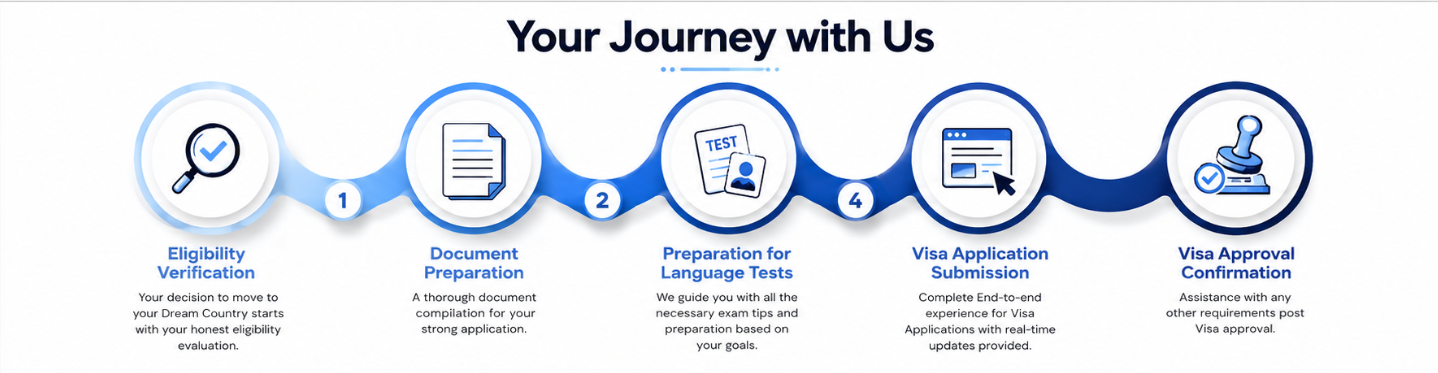
How Work Abroad Helps with Australia Immigration
- Profile assessment for Australia PR, work visa, student visa and family visa pathways
- Guidance on choosing between Subclass 189, 190, 491, 482, 186, 500 and partner visa options
- Australia PR points review with suggestions to improve English, experience and nomination strategy
- Document checklist support for skills assessment, EOI, state nomination and visa filing
- CV, employment evidence and reference-letter guidance for skilled migration cases
- English test planning support for IELTS, PTE or other accepted tests
- Step-by-step guidance for ImmiAccount forms, uploads and requests for information
- Pre-departure and settlement guidance for applicants preparing to move to Australia
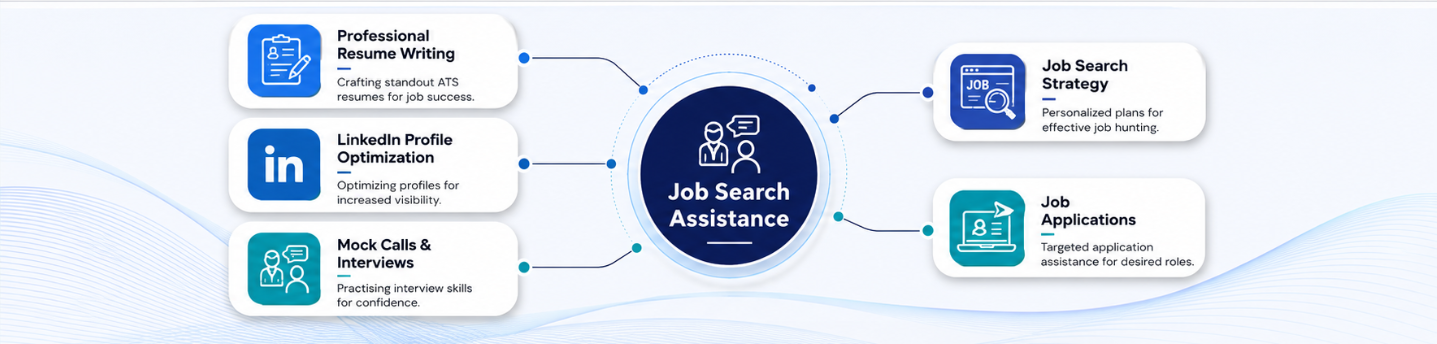
Unlocking Your Career Potential: WorkAbroad's Comprehensive Job Search Assistance
WorkAbroad offers a holistic job search assistance service designed to empower job seekers at every stage of their career journey. From crafting standout resumes to mastering interview skills, their comprehensive approach aims to maximise your chances of landing your dream job in today's competitive market.
Key features of WorkAbroad's Job Search Assistance: