Austria Immigration from India: Visa, Work Permit & PR Guide
Understand Austria work visas, Red-White-Red Card routes, job seeker options, residence permits and long-term settlement pathways before you apply.

Austria is a strong choice for skilled professionals, students, entrepreneurs and families who want to build a long-term future in Europe. The country offers a structured immigration system through the Red-White-Red Card, EU Blue Card, student residence permits, family reunification and long-term residence options. For Indian applicants, the right pathway depends on your education, work experience, German or English language skills, job offer, financial proof and purpose of stay. Work Abroad helps you compare Austria immigration options, prepare documents carefully and understand the application process without unrealistic promises.
Check Your Eligibility?
Get a free eligibility check by our immigration officer to your dream destination.
Why Immigrate to Austria? Benefits for Skilled Workers, Students and Families
Austria immigration attracts applicants who want European career opportunities, strong public services and a stable lifestyle. The benefits below are general advantages, but eligibility, work rights and long-term residence depend on your visa category and personal profile.
High Quality of Life in Europe
Austria is known for safe cities, organised public transport, clean surroundings, cultural life and strong public infrastructure. Vienna and other Austrian cities are often preferred by professionals and families looking for a balanced European lifestyle.
Skilled Career Opportunities
Austria has demand for qualified workers in areas such as engineering, IT, healthcare, technology, hospitality, research, manufacturing and specialised trades. The Red-White-Red Card is designed to help eligible non-EU workers take up suitable employment in Austria.
Clear Work and Residence Pathways
Austria follows a structured immigration model with different routes for skilled workers, highly qualified professionals, students, founders, family members and long-term residents. This makes it easier to choose a pathway based on your qualifications and purpose.
Access to European Work Culture
Austrian employers generally value professional training, punctuality, compliance and practical experience. Skilled migrants who meet language and role requirements can build a stable career in a highly regulated European labour market.
Education and Research Environment
Austria offers universities, applied sciences institutions and research opportunities for international students. Graduates may explore post-study options if they meet the rules for residence extension, job search or skilled employment.
Pathway to Long-Term Residence
Applicants who live legally in Austria, meet integration requirements, maintain valid insurance and satisfy income and residence conditions may become eligible for longer-term residence options over time.
Austria Visa and Immigration Pathways for Indians
Austria immigration is not a single visa route. Indian applicants usually apply through work, study, job search, family, business or long-term residence pathways. The table below gives a practical overview of the main Austria visa and residence permit options.
| Pathway Type | Main Permit/Visa Name | Typical Purpose | Usual Initial Validity | Key Target Group |
|---|---|---|---|---|
| Skilled work | Red-White-Red Card | Live and work in Austria for a specific employer | Usually issued for a limited period and renewable as per rules | Skilled non-EU workers with a qualifying job offer |
| Extended work rights | Red-White-Red Card Plus | Continue residence with broader labour-market access | Often granted after meeting previous residence and work conditions | Eligible RWR Card holders and certain family members |
| Highly qualified employment | EU Blue Card | Residence and work for highly qualified professionals | Linked to the employment contract and official approval | Degree holders with a qualifying job offer and salary level |
| Job search | Job Seeker Visa for Very Highly Qualified Workers | Enter Austria to search for suitable skilled employment | Up to 6 months | Highly qualified professionals who meet the points threshold |
| Study | Residence Permit - Student | Study full-time at an eligible Austrian institution | Usually granted for a limited study period and renewable | International students with admission and financial proof |
| Graduate transition | Post-study job search or residence extension | Remain after Austrian studies to look for suitable work | Time-limited, subject to current residence rules | Graduates from Austrian higher education institutions |
| Family reunification | Family Member Residence Permit / RWR Card Plus | Join an eligible sponsor living legally in Austria | Usually linked to sponsor status and family eligibility | Spouse, registered partner and minor children where eligible |
| Business and self-employment | Start-up Founder / Self-employed Key Worker Route | Build or operate a business that creates economic value in Austria | Case-specific and subject to approval | Founders, entrepreneurs and self-employed applicants |
| Permanent or long-term stay | Long-Term Resident - EU | Secure long-term residence after legal stay and integration | Renewable long-term residence card | Applicants who meet residence, income, insurance and integration rules |
| Short stay | Schengen Visa Type C | Tourism, business meetings, family visits or short travel | Up to 90 days in any 180-day period | Indian visitors and other non-visa-exempt nationals |
Austria Immigration Requirements from India
Austria immigration requirements vary by permit type. Most applicants must prove identity, purpose of stay, financial capacity, accommodation, health insurance and clean background. Work routes usually require a job offer or points eligibility, while study routes require admission from an Austrian institution.
Common requirements across all pathways:
- Valid passport with sufficient validity and clear travel history
- Completed visa or residence-permit application form for the selected pathway
- Recent photographs as per Austrian embassy or VFS specifications
- Proof of purpose, such as admission letter, job offer, work contract or family relationship evidence
- Financial proof showing ability to support yourself and accompanying dependants, where applicable
- Health insurance that meets Austrian or Schengen requirements for the visa category
- Accommodation proof or address arrangement in Austria, where required
- Police clearance, civil documents and educational records when requested
- Certified German or English translations for documents not accepted in their original language
- Apostille or legalisation for Indian civil and academic documents wherever required
| Pathway | Eligibility Criteria | Salary/Financial Requirement | Points Required | Key Documents | Processing Time |
|---|---|---|---|---|---|
| Red-White-Red Card for Skilled Workers | Relevant qualification or vocational training, job offer in Austria and eligibility under the applicable worker category | Salary must meet the official threshold for the role and category; verify current rules before applying | Points may apply depending on the category, including qualification, experience, age and language skills | Passport, work contract, qualification proof, CV, experience letters, language proof if claimed, insurance, accommodation and police clearance | Often several weeks to a few months depending on authority workload and document completeness |
| EU Blue Card Austria | Higher education qualification, relevant skilled employment and a qualifying job offer from an Austrian employer | Gross salary must meet the official EU Blue Card salary threshold for Austria | No standard points test, but qualification, salary and role fit are assessed | Passport, degree certificate, employment contract, CV, proof of qualifications, insurance and supporting employer documents | Processing varies by authority and application quality |
| Austria Job Seeker Visa | Very highly qualified professional seeking skilled employment in Austria | Proof of funds for stay, accommodation and health insurance during the job-search period | Minimum points required under the very highly qualified worker system | Passport, education proof, work experience evidence, salary evidence where claimed, language certificates, funds proof and insurance | Usually several weeks, subject to embassy appointment availability and document review |
| Residence Permit - Student | Admission to a recognised Austrian university or eligible education institution | Proof of sufficient funds for living expenses, tuition where applicable, accommodation and health insurance | Not applicable | Passport, admission letter, academic transcripts, financial proof, accommodation proof, insurance, birth certificate and translated/apostilled documents if required | Can take a few months, so students should apply early |
| Family Reunification | Eligible family relationship with a person legally residing in Austria | Sponsor must usually show sufficient income, housing and insurance for family members | Not applicable | Passports, marriage or birth certificates, sponsor residence card, housing proof, income documents, insurance and translated civil records | Varies by local authority, sponsor status and document completeness |
| Long-Term Resident - EU | Continuous legal residence in Austria for the required period and fulfilment of integration conditions | Stable income, health insurance and suitable accommodation are usually required | Not applicable | Residence history, income proof, insurance records, registration proof, integration/language evidence and police clearance where required | Depends on the local Austrian authority and completeness of records |
Austria Visa Fees and Immigration Costs for Indians
Austria visa fees and residence permit charges can change, and additional costs may apply for VFS service fees, translations, apostille, courier, insurance, travel, accommodation and document preparation. Treat the table below as a planning guide and verify the latest fee on the official Austrian embassy or VFS page before paying.
| Expense | Price in Euro | Price in INR |
|---|---|---|
| Schengen Visa Type C - Adult | Approx. €90 | Varies by exchange rate |
| Schengen Visa Type C - Child 6 to 12 years | Approx. €45 | Varies by exchange rate |
| National Visa Type D | Approx. €150 | Varies by exchange rate |
| Residence Permit Application | Official fee varies by permit type | Varies by exchange rate |
| Red-White-Red Card / EU Blue Card | Permit and card charges may apply | Verify current official fee |
| Document Translation and Apostille | Case-specific | Depends on document count |
| Health Insurance | Policy-specific | Depends on coverage and duration |
Austria Job Seeker Visa for Highly Qualified Workers
The Austria Job Seeker Visa allows very highly qualified non-EU professionals to enter Austria for a limited period to search for suitable employment. It is not a work permit by itself. After receiving a qualifying job offer, the applicant must move to the correct work and residence route, such as the Red-White-Red Card.
This route is best suited for applicants with strong academic qualifications, senior experience, research achievements, innovation credentials, language skills or a high-value professional background.
- You must meet the minimum points threshold for very highly qualified workers.
- Your qualifications, professional experience, age, language level and achievements must be supported by documents.
- You must show enough funds, valid insurance and accommodation arrangements for the job-search stay.
- You should prepare a realistic job-search strategy before travelling because work is not automatically allowed under the job seeker visa.
- Once you secure a suitable offer, you must apply for the appropriate Austrian work and residence permit before starting employment.
Austria Job Seeker Visa Points System for Very Highly Qualified Workers
| Special Qualifications & Skills | Points |
|---|---|
| Graduation from a recognised higher education institution | Points available based on qualification level |
| Studies in mathematics, IT, natural sciences or technology | Additional points may be available |
| PhD, doctoral qualification or post-doctoral qualification | Higher points for advanced academic achievement |
| Senior management income or high previous salary | Points may apply if supported by acceptable evidence |
| Research, innovation, patents or academic publications | Points may apply for recognised achievements |
| Recognised awards or professional distinctions | Points may apply where evidence is accepted |
| Relevant professional experience | Points generally increase with documented years of experience |
| German or English language skills | Points depend on accepted level and certificate |
| Additional European language skills where recognised | Extra points may apply for listed languages |
| Age | Higher points are generally available for younger applicants within the accepted bands |
| Previous studies in Austria | Additional points may be available for eligible Austrian study history |
| Minimum score to qualify | Usually 70 points out of 100; verify current official criteria |
Austria Immigration Policy: How the System Works
Austria uses a regulated immigration framework for third-country nationals. Work-based immigration is mainly organised through the Red-White-Red Card system, which evaluates applicants by category, occupation, qualification, salary, language ability and labour-market need.
- Very Highly Qualified Workers: For applicants with strong academic, professional, research or innovation profiles.
- Skilled Workers in Shortage Occupations: For applicants trained in occupations where Austria has labour shortages.
- Other Key Workers: For applicants with a job offer, required experience and salary meeting the relevant criteria.
- Graduates of Austrian Universities: For students who completed eligible studies in Austria and want to transition into work.
- Start-up Founders and Self-employed Key Workers: For entrepreneurs whose business activity can create economic value in Austria.
Apart from skilled work routes, Austria also provides residence options for specific personal, academic and family situations.
- Residence Permit - Student for eligible full-time study
- Family reunification permits for eligible spouses, partners and children
- EU Blue Card for highly qualified employment
- Settlement permits for long-term residence categories
- Schengen and National Visa routes for short or temporary stays
Austria Skilled Immigration Qualifications and Points Criteria
Austria skilled immigration depends on whether your profile fits a shortage occupation, key worker route, highly qualified worker route, EU Blue Card or employer-led residence permit. A strong profile usually includes relevant education, documented experience, a job offer, language ability and a salary that meets the official threshold.
Very highly qualified applicants may use the Job Seeker Visa if they meet the points threshold and want to search for skilled work in Austria. Applicants who already have a suitable job offer may be able to apply directly under a Red-White-Red Card or EU Blue Card route, depending on the role and salary.
Skilled Workers in Shortage Occupations can apply when their training and job offer match an occupation listed by Austria as a shortage role. The list can change, so applicants should verify the latest occupation list before preparing documents.
Points Factors for Skilled Workers in Shortage Occupations
| Qualifications | Points |
|---|---|
| Completed training or vocational qualification in the shortage occupation | Core points factor |
| Relevant work experience matching the qualification | Additional points based on documented experience |
| Work experience gained in Austria | Additional points may apply |
| German language skills | Higher points for stronger accepted German levels |
| English language skills | Points may apply where accepted for the role |
| Other recognised language skills | Additional points may apply in specific categories |
| Age | Points depend on the official age band |
| Corporate language English | Additional points may apply if English is the company language and accepted |
| Minimum score to qualify | Usually 55 points for shortage occupation route; verify current official criteria |
Also Read: Average Salary in Austria: Latest Salary Insights
Austria Visa Processing Time from India
| Visa Type | Processing Time |
|---|---|
| Schengen Visa Type C | Commonly around 15 working/calendar days after submission, but may take longer in peak periods |
| National Visa Type D | Processing varies by purpose, appointment availability and document checks |
| Red-White-Red Card | Often several weeks to a few months depending on Austrian authority review |
| EU Blue Card Austria | Varies by employer documents, qualification review and authority workload |
| Austria Job Seeker Visa | Usually several weeks after a complete application, subject to embassy timelines |
| Residence Permit - Student | Can take a few months; students should apply well before course start |
| Family Reunification | Varies by sponsor status, civil documents and authority workload |
Austria Business Immigration and Start-up Routes
Austria business immigration is generally suitable for founders, investors and self-employed professionals who can show a credible business plan, funding, economic benefit and compliance with Austrian rules. Approval is evidence-based and depends on the category.
- Start-up Founders: For entrepreneurs planning to establish an innovative business in Austria and meet funding, ownership and points requirements.
- Self-employed Key Workers: For applicants whose independent activity creates significant economic benefit for Austria.
- Company Expansion or Business Setup: For business owners planning Austrian operations, subject to company, residence and employment-law requirements.
- Investor-linked Residence Options: Available only where the investment and business activity meet strict legal and economic criteria.
Business applicants usually need stronger documentation than visitors or students because authorities assess business credibility and economic value.
- Detailed business plan with market, revenue and hiring strategy
- Proof of capital, investment source and financial sustainability
- Evidence of relevant business ownership or management experience
- Clean criminal record and compliant source of funds
- Health insurance, accommodation and personal financial capacity
- Professional tax, legal or accounting support where required
General Austria Immigration Outline
Austria Stay Under 6 Months: Short Stay and Job Search Options
- For tourism, business visits or family visits, Indian citizens generally apply for a Schengen Visa Type C.
- Short-stay visitors must follow the 90 days in any 180-day period rule across the Schengen Area.
- Very highly qualified workers may explore the Austria Job Seeker Visa if they meet the points criteria and want to search for skilled work.
- Short-stay visas do not automatically allow employment; work rights depend on the exact visa and permit category.
Austria Stay Over 6 Months: Residence Permit Options
For stays longer than six months, Indian applicants usually need a residence permit. The correct route depends on whether you are going to Austria for skilled employment, study, family reunification, business, research or long-term settlement.
- Red-White-Red Card for skilled work with a qualifying Austrian job offer
- EU Blue Card for highly qualified employment
- Residence Permit - Student for full-time study
- Family reunification residence permits for eligible family members
- Business or self-employment routes for qualified founders and key workers
- Long-Term Resident - EU after meeting legal residence and integration conditions
Immigration to Austria from India: Step-by-Step Process
Moving from India to Austria requires careful planning because Austrian authorities assess your purpose, eligibility, documents and financial readiness. The process is smoother when you choose the correct pathway before collecting documents.
- Skilled employment: Apply through Red-White-Red Card or EU Blue Card after securing a qualifying job offer.
- Job search: Use the Job Seeker Visa only if you qualify as a very highly qualified worker.
- Study: Apply after receiving admission from an eligible Austrian institution and arranging funds, insurance and accommodation.
- Family route: Apply if you are joining an eligible sponsor legally living in Austria.
- Business or self-employment: Prepare a credible business case and proof of funds before applying.
Also Read: Austria Citizenship by Investment: Process, Eligibility & More
How to Apply for Austria Immigration from India
Step 1
Choose the correct Austria visa or residence pathway based on your purpose of stay.
Step 2
Check eligibility, points, salary threshold, language requirement and occupation category where applicable.
Step 3
Collect passport, civil documents, education records, experience proof, financial documents and insurance.
Step 4
Translate and apostille documents where required for Austrian authorities.
Step 5
Book the visa or residence-permit appointment through the correct Austrian mission or authorised visa centre.
Step 6
Submit the application with biometrics, fee payment and complete supporting documents.
Step 7
Respond quickly if the embassy or Austrian authority requests additional information.
Step 8
After approval, travel to Austria, register your address within the required timeline and collect the residence permit where applicable.
Work Abroad can help you review your profile, identify the suitable Austria immigration pathway, organise documents and prepare a practical application checklist. Final approval always depends on Austrian authorities.
Also Read: Apply Austria Work Visa: Eligibility, Process and Fees
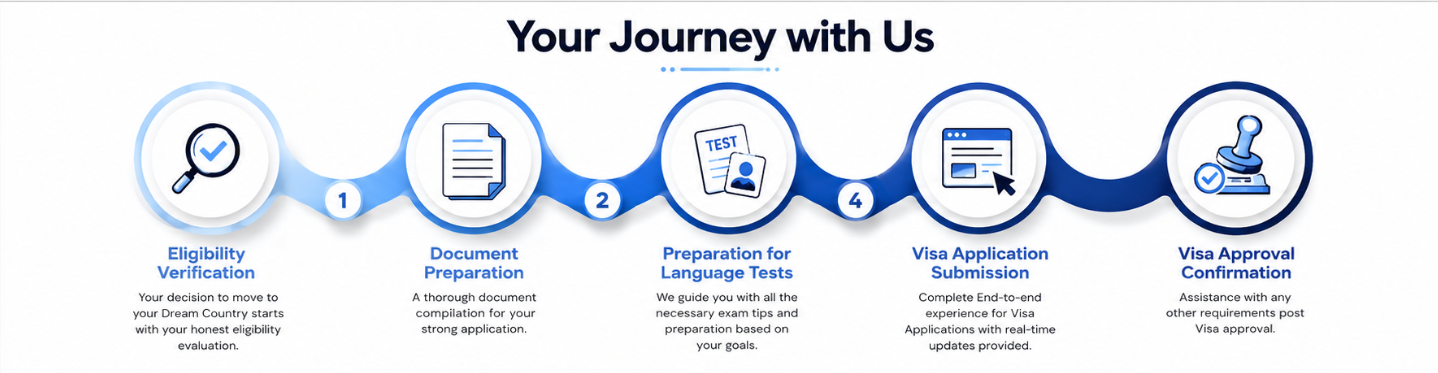
How Work Abroad Supports Your Austria Immigration Journey
- Profile evaluation for Austria work, study, job seeker and family pathways
- Guidance on Red-White-Red Card, EU Blue Card and residence permit options
- Document checklist preparation based on your selected visa category
- Support for CV, experience letters, education proof and application forms
- Guidance on translation, apostille and document-format requirements
- Interview and appointment preparation for embassy or visa centre submission
- Post-approval guidance for travel planning, registration and relocation basics
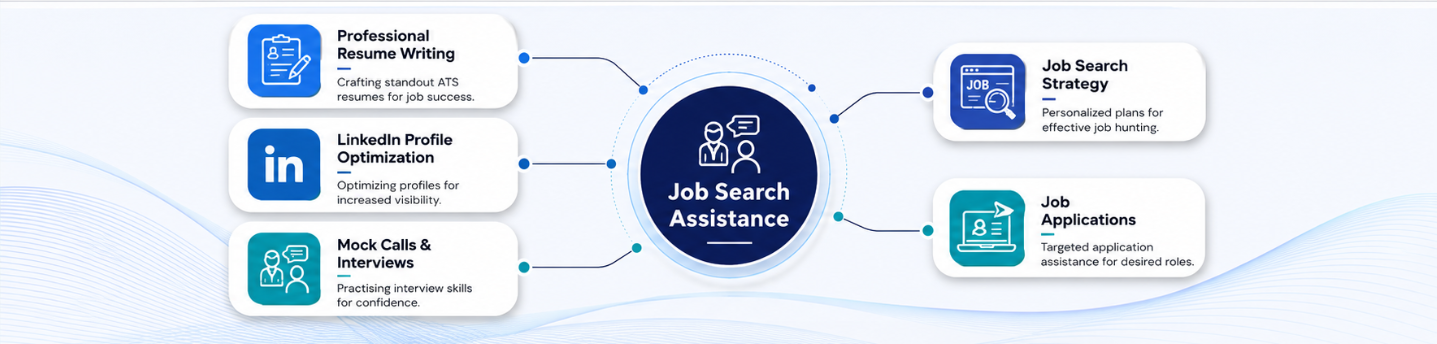
Unlocking Your Career Potential: WorkAbroad's Comprehensive Job Search Assistance
WorkAbroad offers a holistic job search assistance service designed to empower job seekers at every stage of their career journey. From crafting standout resumes to mastering interview skills, their comprehensive approach aims to maximise your chances of landing your dream job in today's competitive market.
Key features of WorkAbroad's Job Search Assistance: