
The IELTS exam pattern 2026 measures the Listening, Reading, Writing, and Speaking testing skills required for studying, working, or migrating. Understanding the pattern is key to achieving the band score you need. The total time for the main exam is 2 hours and 45 minutes.
What Is the IELTS Exam Pattern? - A Quick Overview
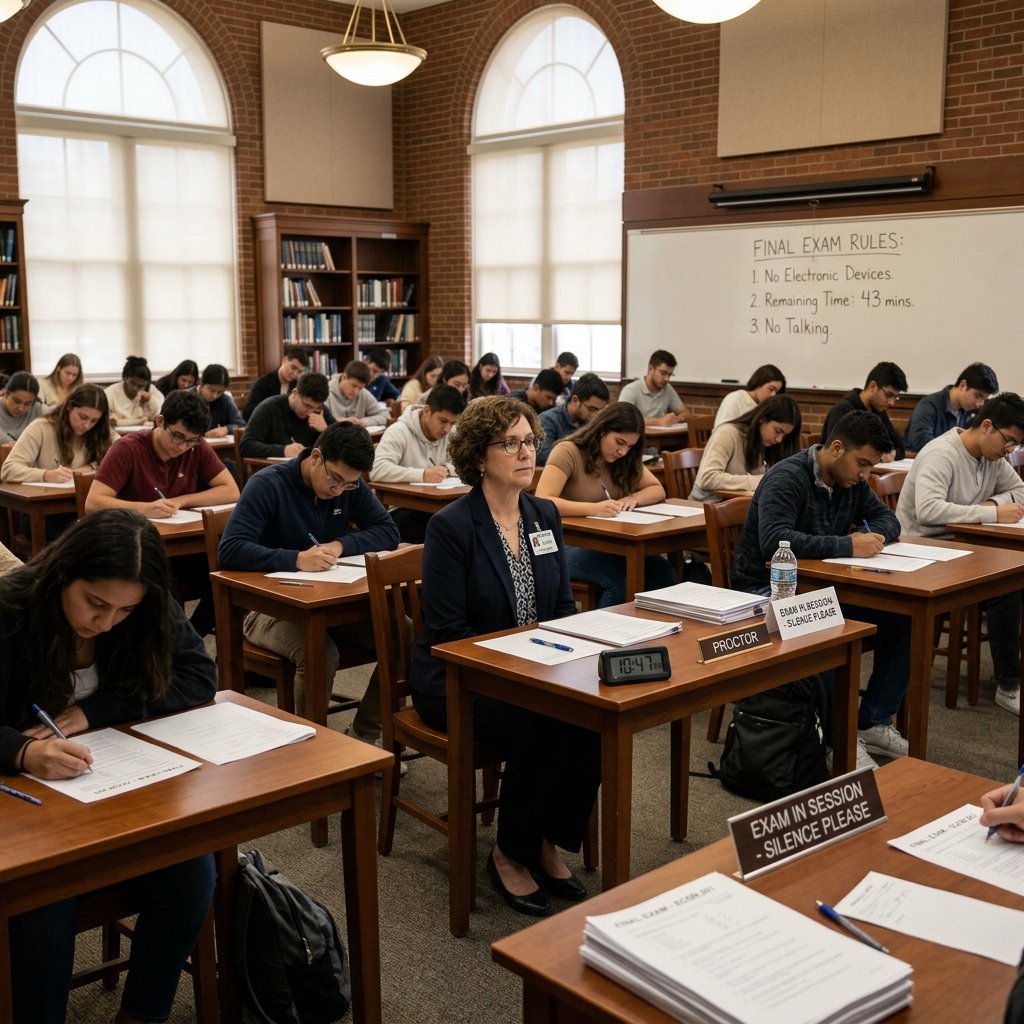
The IELTS exam pattern consists of four sections evaluating English language proficiency for study, work, or migration: Listening, Reading, Writing, and Speaking.
- IELTS (International English Language Testing System) establishes communication skills for real-life usage in English-speaking countries.
- Over 3.5 million candidates take the test globally every year. India is among the leading test-taking nations for candidates applying to Canada, Australia, the UK, or the USA.
- The Academic version is for university admissions; General Training is for work and migration. Both use a 0-9 band scale and have no negative marking.
- The 2026 pattern remains stable at a structural level, incorporating the One Skill Retake feature and modern question variations.
“Most Indian students score lower than their potential, not because of poor English, but because they begin preparing without fully understanding the IELTS exam structure. Pattern clarity is your first competitive advantage.”— Divyansh, WorkAbroad Expert
What Are the Two Types of IELTS Exam Patterns? (Academic vs General Training)
The two formats of the IELTS exam are designed for distinct goals:
- IELTS Academic: Targets university admissions and professional registration (e.g., medical, nursing, and engineering registration boards).
- IELTS General Training: Designed for skilled migration, work visas, and secondary education.
- Listening and Speaking are identical; Reading and Writing vary in text difficulty and task type.
| Feature | IELTS Academic | IELTS General Training |
|---|---|---|
| Purpose | University / Professional Registration | Migration / Work / Secondary Education |
| Listening | Same | Same |
| Speaking | Same | Same |
| Reading | Complex academic texts (journals/books) | Everyday texts (notices, ads, manuals) |
| Writing Task 1 | Describe graph/chart/diagram | Write a formal/informal letter |
| Writing Task 2 | Essay (same as General) | Essay (same as Academic) |
| Who should take it | Students, doctors, nurses, and engineers | Skilled workers, PR applicants |
What Is the Section-Wise IELTS Exam Paper Pattern? (Complete Breakdown)
The exam features four sections completed in ~2 hours and 45 minutes with no negative marking.
| Section | Duration | Questions/Tasks | Marks |
|---|---|---|---|
| Listening | 30 min + 10 min transfer (paper) | 40 questions | 40 marks |
| Reading | 60 min | 40 questions | 40 marks |
| Writing | 60 min | 2 tasks | Band descriptors |
| Speaking | 11–14 min | 3 parts | Band descriptors |
What Is the IELTS Listening Section Pattern?
- Features 40 questions across 4 recordings (everyday social conversation, monologue, academic discussion, lecture).
- Question Types: Multiple choice, matching, map/plan labelling, form/sentence completion. Diverse accents (British, Australian, New Zealand, North American) are used.
- Paper-based tests allow 10 minutes of extra transfer time to copy answers onto the answer sheet.
“In 2026, IELTS Listening now features accents from non-native but fluent speakers, including Indian English. Practising with diverse audio sources is no longer optional.”— WorkAbroad Expert
What Is the IELTS Reading Section Pattern?
- 60 minutes for 40 questions from 3 passages.
- Academic: Texts sourced from books, journals, newspapers.
- General: Everyday workplace materials, advertisements, notices, and general-interest articles.
- Question Types: True/False/Not Given, matching headings/info, sentence completion, multiple choice. No extra transfer time is provided.
“The biggest Reading mistake is spending too long on one passage. If a question is taking more than 2 minutes, move on and return; time discipline is non-negotiable.”— WorkAbroad Expert
What Is the IELTS Writing Section Pattern?
- 60 minutes for 2 tasks. Task 2 has double the scoring weight of Task 1.
- Task 1: Describe a chart/graph/map (Academic) or write a letter (General Training). Minimum 150 words.
- Task 2: Write an opinion, discussion, or problem-solution essay. Minimum 250 words. Memorised templates are penalized.
“Writing Task 2 carries more band weight than Task 1. Spending at least 3 minutes planning your essay structure before writing is the single highest-ROI preparation habit.”— WorkAbroad Expert
What Is the IELTS Speaking Section Pattern?
- 11–14 minute face-to-face interview, identical for both types.
- Part 1: Personal introductions and general questions (hometown, studies, hobbies).
- Part 2: Speak for 1-2 minutes on a cue card topic after 1 minute of preparation.
- Part 3: A two-way abstract discussion linked to the Part 2 topic. Natural, spontaneous speech is rewarded.
“Pronunciation in IELTS does NOT mean a British or American accent, it means clarity and intelligibility. Indian students can score Band 8–9 in Speaking with their natural accent, provided speech is clear and fluent.”— WorkAbroad Expert
What Is the IELTS Exam Pattern 2026 — What Has Changed This Year?
While the core pattern is stable, key updates in 2026 include:
- One Skill Retake (OSR): Computer-delivered format only. Allows candidates to retake a single section within 60 days of the test at IDP India centres.
- Academic Task 1 Mixed Charts: Combined layouts (e.g., pie chart + bar chart) test comparative synthesis.
- Nuanced Writing Prompts: General essays focus on specific societal trends, penalizing generic scripts.
- Video Call Speaking (VCS): Expanding at select Indian test centres, keeping identical scoring standards.
- Diverse Accents: In Listening, more European, Asian, and Indian accented fluent speakers are featured.
“The single most impactful 2026 change for Indian students is the One Skill Retake; it eliminates the need to retake the full 3-hour test if you fall short in one section. Always opt for computer-based IELTS in India to access this feature.”— WorkAbroad Expert
How Does the IELTS Scoring System Work in the Exam Pattern?
A 9-band scale is used for each component. The overall band score is the average of the four sections, rounded to the nearest half or whole band.
| Raw Score (out of 40) | Listening/Reading Band |
|---|---|
| 39-40 | 9.0 |
| 37-38 | 8.5 |
| 35-36 | 8.0 |
| 32-34 | 7.5 |
| 30-31 | 7.0 |
| 26-29 | 6.5 |
| 23-25 | 6.0 |
What is the Difference Between the Paper-Based and Computer-Based IELTS Exam Patterns?
The exam content is identical; the main differences lie in format features, Listening timing, and retake eligibility:
| Feature | Paper-Based | Computer-Based |
|---|---|---|
| Content / Scoring | Identical | Identical |
| Listening Transfer Time | 10 minutes extra | No separate transfer time needed |
| Writing | Handwritten (black pen/pencil) | Typed on keyboard |
| One Skill Retake | Not available | Available |
| Screen Tools | None | Highlighting, custom notepad |
“If you are taking the IELTS in India in 2026, opt for computer-based delivery. The One Skill Retake feature is a game-changer; it gives you a second chance on just one section without repeating the entire exam.”— Shreya, WorkAbroad Expert
How Should Indian Students Prepare Based on the IELTS Exam Syllabus and Pattern?
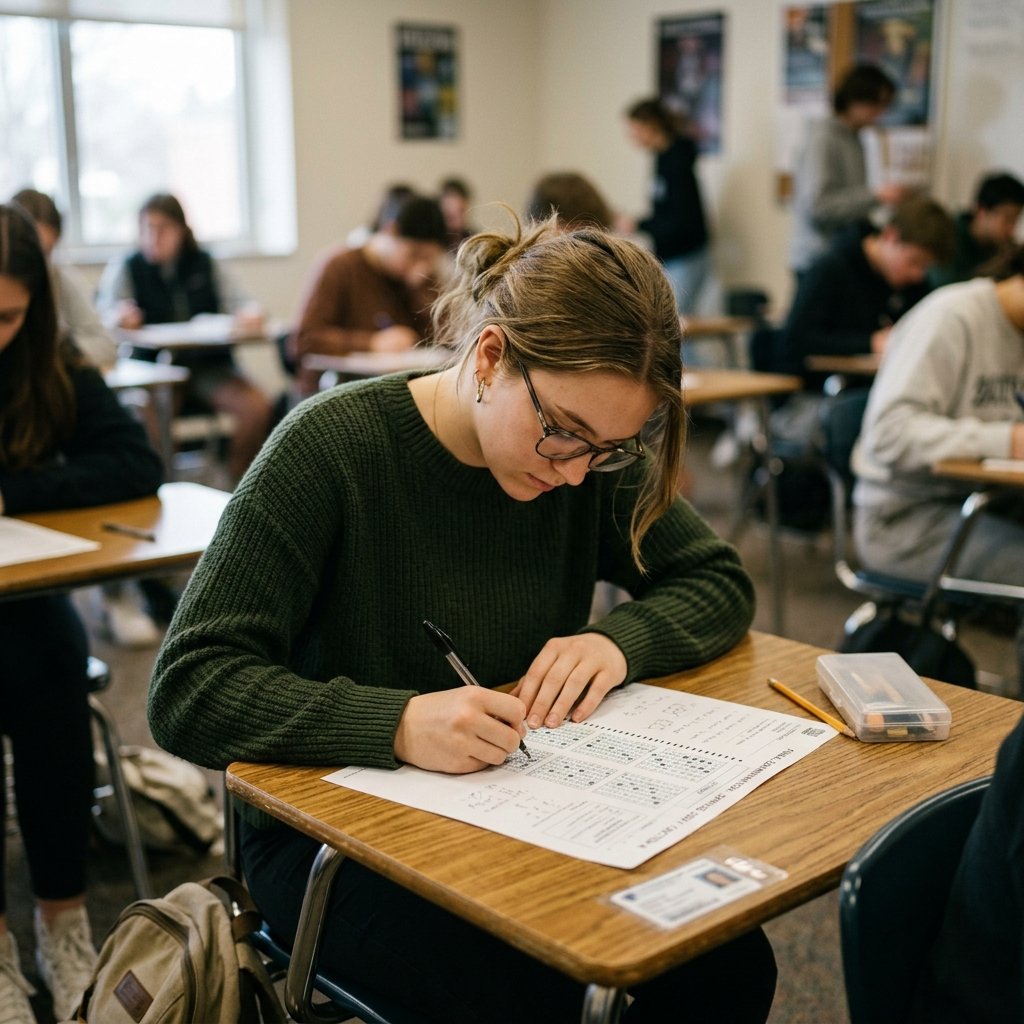
Indian students excel by focusing on section-specific practice, time management, and natural expression:
How Should You Prepare for the IELTS Listening Pattern?
- Use official Cambridge IELTS Books 14–19. Practice note-taking during the audio.
- Scan ahead for keywords and pay close attention to diverse global accents (non-native accents are featured in 2026).
- Verify all spelling: errors result in zero score for that question.
How Should You Prepare for the IELTS Reading Pattern?
- Commit to a strict 20 minutes per passage. Skim for structure, then scan passages to locate answers.
- Focus heavily on True/False/Not Given questions and sentence matching drills.
- Read daily from reputable resources like the BBC or nature journals to build speed.
How Should You Prepare for the IELTS Writing Pattern?
- Plan your essays for 3-5 minutes before writing. Format arguments cohesively.
- ditch generic templates; respond to the specific prompt instructions.
- Target 160+ words for Task 1 and 270+ words for Task 2.
How Should You Prepare for the IELTS Speaking Pattern?
- Practice speaking for 2 minutes continuously on cue card topics. Record your practice.
- Avoid memorised scripts. Prioritise natural transitions and fluent vocabulary over accent modification.
“A 30-day structured IELTS preparation plan that spends 45–60 minutes daily on section-specific practice is sufficient for most Indian students to improve their band score by 0.5-1.0 bands. Blind practice without pattern awareness is the most common and most avoidable mistake.”— WorkAbroad Expert
What Are the Common Mistakes Indian Students Make in Each IELTS Section?
| Section | Most Common Mistake | How to Fix It? |
|---|---|---|
| Listening | Spelling errors during answer transfer | Write while listening; double-check spelling |
| Reading | Spending too long on one question | 2-min limit per question; guess and move on |
| Writing | Using memorised templates | Respond to prompt nuances, avoid scripts |
| Writing | Going under the word count | Target 160+ Task 1, 270+ Task 2 words |
| Speaking | Memorised/robotic opening answers | Practice natural, spontaneous responses |
| Speaking | Short answers in Part 1 | Extend with reasons and examples |
“The two most impactful fixes for Indian test-takers are: (1) practising Listening with strict spelling discipline, and (2) moving away from template Writing — these two changes alone can add 0.5 to the overall band score.”— WorkAbroad Expert
What Are the IELTS Exam Dates, Fees, and Registration Process in India (2026)?
- Exam Dates: Slots are available weekly in major Indian hubs. Check
ielts.idpindia.comfor specific regional schedules. - Registration: Complete online booking, select format (Computer vs. Paper) and module (Academic vs. General Training), and upload your valid passport.
- Fee in India (2026): INR 19,000 (varies slightly by IDP/British Council centre; check the latest portal rates).
- Mandatory ID: Scanned copy of your valid international passport (Aadhaar or PAN cards are not accepted).
- Results & Retakes: Results arrive online in 3-5 days for CBT. Unlimited attempts are allowed, with access to the computer-delivered One Skill Retake within 60 days.
Conclusion
Understanding the IELTS exam pattern is the foundation of every successful test-preparation journey for Indian students pursuing global opportunities. Familiarity with the Listening, Reading, Writing, and Speaking modules, Academic vs. General differences, and 2026 features like One Skill Retake will help you achieve your desired band score.
Contact WorkAbroad for more information on IELTS Exam Pattern 2026: Complete Guide & Structure.
